EU Taxonomy
The EU Taxonomy Regulation requires companies to report what share of their turnover, capital expenditure and operating expenditure is environmentally sustainable. Planmark’s EU Taxonomy tool guides your team through the full assessment in a structured process — from entering financial data to producing a completed Article 8 disclosure table ready for your CSRD sustainability report.
Compliance and Regulatory Reporting
Meeting EU Taxonomy reporting requirements means working through a precise sequence of assessments. The tool structures this process step by step, applying the technical screening criteria from the Article 8 Delegated Regulation and flagging where a single answer disqualifies an activity, so nothing is overlooked before you report.
- Guide process: Each step covers a distinct part of the assessment in the order required by the regulation.
- Omnibus-ready: The tool reflects the scope and timeline changes introduced by the Omnibus simplification package.

Data Entry and KPI Calculation
Accurate taxonomy KPIs depend on consistent financial figures and correct activity classification. The tool separates total company financials from activity-level amounts, applies the taxonomy definition of each metric and calculates all three mandatory KPIs automatically as you work through the assessment.
- Activity identification: Select your eligible economic activities directly from the Delegated Regulation and enter the turnover, CapEx and OpEx attributable to each.
- Automatic KPI calculation: Turnover, CapEx and OpEx percentages update in real time and are broken down into taxonomy-aligned, eligible-but-not-aligned and non-eligible — ready for reconciliation with your audited financial statements.
Strategic Impact and Growth
Verified taxonomy KPIs are increasingly a prerequisite for green financing, public procurement and investor reporting. The tool produces an Article 8 disclosure table formatted for direct inclusion in your CSRD sustainability report, and a bilingual interface means the same assessment works in international reporting contexts.
- Audit-ready Article 8 output: he completed disclosure table is structured for external assurance review and reconcilable with audited financial statements, reducing preparation time ahead of your limited assurance engagement.
- Financing and procurement readiness: Taxonomy KPIs in the format banks, green bond frameworks and public procurement criteria ask for — ready to share without additional work.
Why EU Taxonomy alignment matters
Alignment data has become a direct input to capital allocation decisions, supplier selection and long-term strategy — making it one of the few sustainability metrics with an immediate commercial return.
- Stronger position in public procurement: An increasing share of public tenders in construction, infrastructure and energy require taxonomy alignment as a qualification criterion or scoring factor. Early alignment gives you a measurable edge in competitive bids.
- Future-proofing your business: Taxonomy alignment is a leading indicator of where regulation, customer requirements and market expectations are heading.

Start using Planmark today
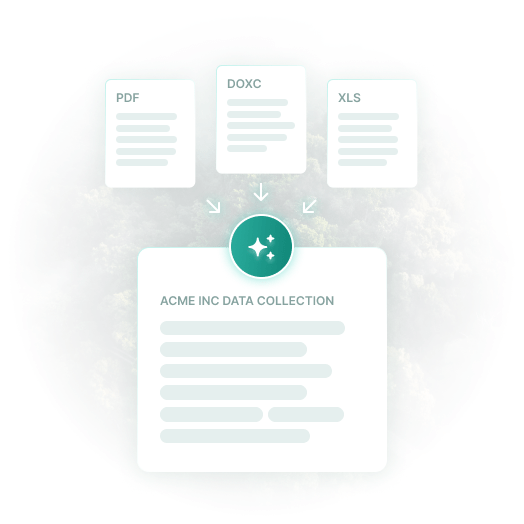
Planmark’s AI-powered reporting platform simplifies ESG reporting by automating data collection and analysis.
Start free