Mastering Carbon Calculation
A Guide to Turning Carbon Data into Strategic Advantage
Understanding your company’s carbon footprint is no longer a niche sustainability project—it is a core business requirement. With the introduction of the Corporate Sustainability Reporting Directive (CSRD) and standards for SMEs (VSME), carbon accounting has shifted from a voluntary “nice-to-have” to a regulated financial-grade metric.
This educational guide explores the global standard for this process: the Greenhouse Gas (GHG) Protocol, and why managing this data effectively is the key to long-term business resilience.
What is the GHG Protocol?
The GHG Protocol is the most widely used international accounting standard for organizations to measure and report their greenhouse gas emissions. Much like International Financial Reporting Standards (IFRS) govern accounting for money, the GHG Protocol governs accounting for carbon.
The goal is to provide a standardized, transparent framework so that a “ton of CO2” reported by a company in Finland means the same thing as a “ton of CO2” reported in France.
Understanding the Three Scopes
To make reporting manageable, the GHG Protocol categorizes emissions into three “Scopes.” Understanding these is the first step in any carbon accounting journey:
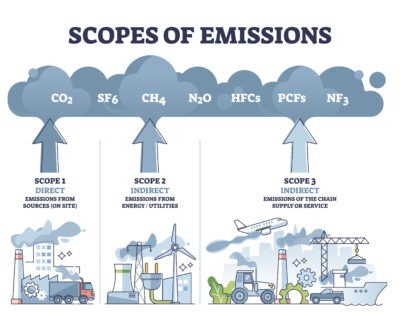
- Scope 1: Direct Emissions (What you burn)
These are emissions from sources that your company owns or controls directly.- Examples: Fuel used in company vehicles, natural gas used in your own boilers, or refrigerant leaks from air conditioning units.
- Scope 2: Indirect Emissions (What you buy for energy)
These are emissions from the generation of purchased electricity, steam, heating, or cooling consumed by the company.- Key Insight: While the emissions happen at the power plant, you are responsible for them because your energy use drives that production.
- Scope 3: Value Chain Emissions (The “Everything Else”)
For most companies, Scope 3 accounts for over 70% of their total footprint. It includes all other indirect emissions that occur in your value chain, both upstream and downstream.- Examples: Purchased goods and services, business travel, waste disposal, and the use of sold products.
Why is a Carbon Footprint Calculated?
Calculating a carbon footprint shifts a company from “guessing” to “knowing,” creating a numerical foundation that translates environmental impact into a language stakeholders—such as banks, customers, and regulators—can understand.
There are three primary educational drivers behind this process:
-
Establishing a Baseline: You cannot manage what you do not measure. By calculating a footprint according to the GHG Protocol (Scopes 1, 2, and 3), an organization identifies “hotspots”, the specific areas where emissions and costs are highest, allowing for realistic, science-based targets.
-
Closing the Transparency Gap: Stakeholders now require more than vague “green” promises. Accurate, audit-ready data is essential for assessing long-term business risk and is increasingly a mandatory requirement in B2B tenders and sustainable financing.
-
Achieving “Strategic Freedom”: This is the shift from “reporting on the past” to “building a sustainable future.” Once you understand your data, you gain the freedom to innovate, optimize your supply chain, and make decisions that align with both global climate goals and business growth.
The Challenge of “Data Chaos”
The theory of carbon accounting is straightforward, but the practice is where most companies struggle. Traditionally, this data is collected via:
- Manual Entry: Employees chasing utility bills and travel receipts.
- Spreadsheet Management: Complex Excels that are prone to human error and difficult to audit.
- Static Reporting: Data that is collected once a year, making it impossible to make proactive adjustments.
In a regulatory environment like the CSRD, “good enough” data is no longer sufficient. Reports must be audit-ready, meaning every number must be traceable back to its original source.
Moving from Reporting to Strategy
The ultimate goal of carbon accounting isn’t just to produce a report—it’s to gain Strategic Freedom. When a company has a clear, data-backed view of its emissions, it can:
- Identify inefficiencies in the supply chain.
- Respond to customer tenders and ESG inquiries with speed and accuracy.
- Access “Green Finance” opportunities where interest rates may be linked to sustainability performance.
Why Calculate Now?
In the current business landscape, a “wait and see” approach to sustainability is a growing risk. Starting the calculation process today offers three primary strategic advantages:
-
Regulatory Preparedness: New EU regulations, such as CSRD and VSME, are rapidly becoming the standard. Calculating now allows you to build a reliable data infrastructure before reporting becomes a legal requirement, avoiding the “data chaos” of last-minute reporting.
-
Competitive Edge: Transparency is a powerful differentiator. In B2B markets, companies that provide validated carbon data win more contracts and position themselves as proactive leaders rather than reactive followers.
-
Scalable Efficiency: Moving beyond manual spreadsheets early prevents “spreadsheet debt.” By adopting automated systems from day one, you eliminate “Excel fatigue” and ensure your sustainability efforts can scale as regulations and your business grow.
How Planmark Helps You Master the GHG Protocol
While the GHG Protocol provides the framework, Planmark provides the engine to execute it without the “Excel fatigue.”
We’ve built an automated ESG intelligence system designed to turn the burden of reporting into your greatest competitive advantage. Here is how Planmark specifically simplifies GHG Protocol compliance:
- Automated GHG Data Mapping: Forget manual entry. Our AI reads your documents and automatically classifies every entry into its proper GHG category, transforming raw files into structured, compliant data instantly.
- Seamless Value Chain Connectivity: Planmark scales beyond your organization by automating data exchanges with your entire value chain. Our tool turns fragmented supplier data into a unified, compliant stream, giving you total visibility into your indirect emissions with zero manual effort.
- Audit-Ready Traceability: Every CO2 calculation in Planmark is linked to its source. When an auditor asks, “Where did this number come from?”, you have the answer in one click.
Start building a sustainable future with us, try our software here for free!